startle
- v. 使惊吓, 使吃惊
- n. 惊吓, 惊愕
- Definition
- v. to surprise someone suddenly and cause slight shock
- n. a sudden feeling of shock or fright
- Example
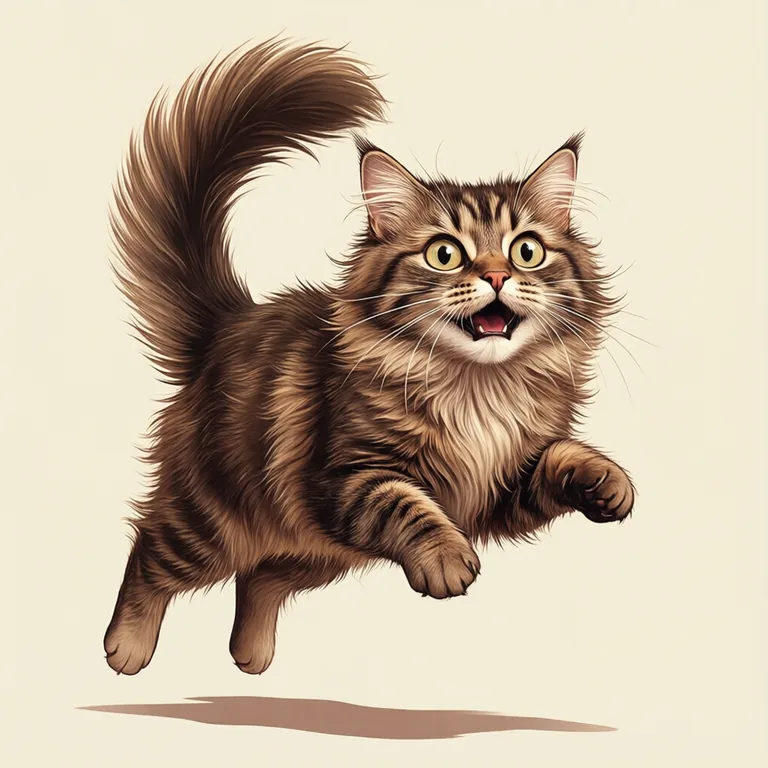
- A sudden noise outside made the cat startle and run away.
- 突如其来的响声把猫吓了一跳,它跑开了。
Synonyms & Differences 近义词辨析
Compared meaning: to move suddenly from fright (verb).
比较义项:因受惊而猛地一动/吓到某人(动词)。
- start
Intransitive; a sudden involuntary jerk of one's own body from surprise, often followed by 'at' + the cause; somewhat formal or literary, less common in casual speech than 'jump'.
不及物动词;指自己的身体因受惊而猛地一动,常接“at + 引起惊吓的事物”;用法偏正式或文学化,在日常口语中不如 jump 常用。
She started at the sound of the door slamming shut.
她听到门砰地关上的声音,吓了一跳。
- jump
Intransitive; the everyday, informal word for a startled movement, often with a small hop; very common in casual speech, and pairs with 'jump out of one's skin' for emphasis.
不及物动词;是日常口语中最常用的说法,指因受惊而突然一动,常带有轻微跳动的意味;常用 jump out of one's skin 来加强语气。
The sudden knock at the window made him jump.
窗户上突然的敲击声吓得他跳了起来。
- startle 本词
Usually transitive: the cause of fright is the subject and the frightened person is the object (often passive 'be startled by'); stronger and more sudden than 'jump', with no sense of physically hopping.
通常是及物动词:引起惊吓的事物作主语,受惊的人作宾语(常用被动式 be startled by);语气比 jump 更强烈、更突然,并不含“身体跳起”的意味。
The fire alarm startled everyone in the office.
火警警报把办公室里所有人都吓了一跳。
Start, jump, and startle describe a sudden reaction to fright. Start and jump mean the person's body moves; jump is everyday, start more formal. Startle is different: the cause is the subject, and the frightened person is the object. Start's 'begin' sense is not compared.
这三个词都与因受惊吓而产生的突然反应有关,但 start 和 jump 描述的是受惊者自己身体猛地一动,而 startle 通常是及物动词,主语是引起惊吓的事物,宾语才是受惊的人(常用被动式 be startled by)。这里不比较 start 更常见的“开始”义项。
Compared meaning: a sudden movement from fright (noun).
比较义项:因惊吓而突然的动作/反应(名词)。
- start
The common everyday word for the sudden jerking movement of surprise; typically used in phrases like 'give a start' or 'wake with a start', not in technical writing.
表示因惊吓而猛然一动的日常常用词,常用于“give a start”(猛然一惊)或“wake with a start”(惊醒)等短语中,不用于科技写作。
He woke with a start when the alarm suddenly went off.
闹钟突然响起时,他猛然一惊,醒了过来。
- startle 本词
Less common as a noun in casual speech; often appears in the technical phrase 'startle response' or 'startle reflex' describing an automatic physical reaction to sudden stimuli.
作名词时在日常口语中较少使用,常出现在“startle response”或“startle reflex”(惊跳反射)这类术语中,描述对突发刺激的自动生理反应。
Researchers measured the baby's startle response to a sudden loud noise.
研究人员测量了婴儿对突如其来的巨响的惊跳反射。
As nouns, start and startle both mean a sudden movement of fright. Start is everyday, common in phrases like 'give a start'. Startle is rare as a noun in speech; it mainly appears in the technical term 'startle response'. Start's 'begin' meaning is not compared.
这两个词都可以指因突然受到惊吓而产生的动作或反应,但语体和搭配不同。start 是日常口语中常见的说法,多见于“give a start”(猛然一惊)或“wake with a start”(惊醒过来)这类固定搭配;startle 作名词较少用于日常口语,更常出现在“startle response”或“startle reflex”(惊跳反射)这类心理学或科学术语中。这里不比较 start 表示“开始”的常见义项。