skeleton
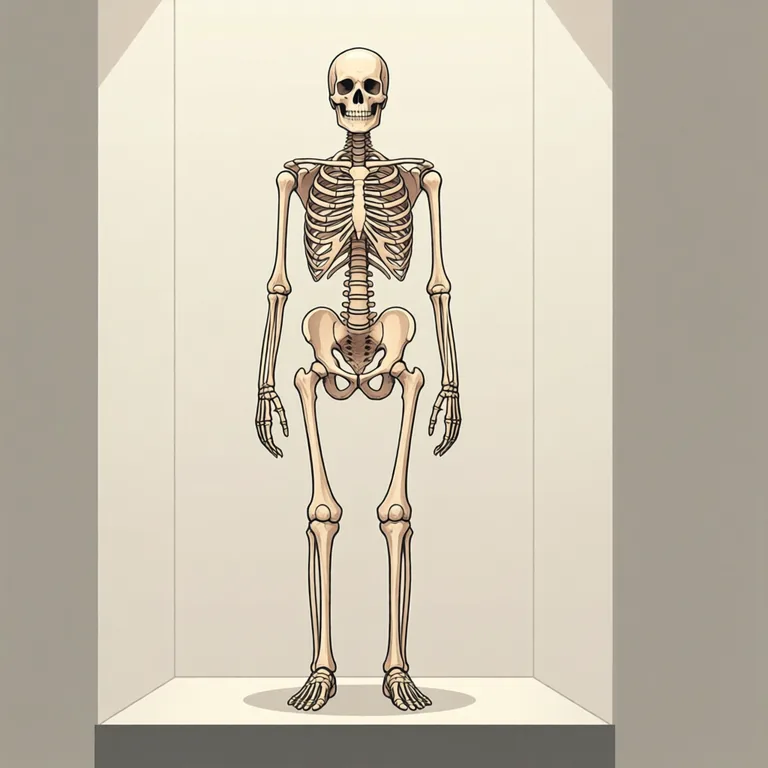
- n. 骨骼
- n. 骨架, 梗概
- adj. 最低限度的
- Definition
- n. the frame of bones in a body
- n. the basic outline or structure of something
- adj. reduced to the smallest number needed
- Example
- The museum displayed a huge dinosaur skeleton near the entrance.
- 博物馆在入口附近展示了一具巨大的恐龙骨架。
Synonyms & Differences 近义词辨析
Compared meaning: the basic structure of something (noun).
比较义项:结构或轮廓(骨架/框架)(名词)。
- frame
Refers to a rigid border or supporting structure, often visible and man-made, that surrounds or holds something in place, like a picture or window.
指坚硬的边框或支撑结构,通常是可见的、人造的,用来包围或固定某物,例如相框或窗框。
The window frame was painted white to match the house.
窗框被漆成白色,以配合房子的颜色。
- skeleton 本词
Refers to the internal framework of bones supporting a body, or figuratively the bare essential outline of something before it is filled in with detail.
指支撑身体的内部骨骼框架,或比喻某事物在填入细节之前的基本轮廓或梗概。
He wrote a rough skeleton of the plot before adding any dialogue.
他先写出情节的粗略梗概,然后才加入对话。
Frame and skeleton both mean the structure that shapes something. Frame is a rigid border or support, like a window frame. Skeleton is the internal bone structure, or a plan's bare outline. Their other senses, falsely blaming someone and a hidden secret, are not compared.
这两个词都可以指支撑或勾勒出某物形态的基本结构,但frame强调可见的、通常是人造的边框或支撑物,而skeleton强调内部的、支撑整体形态的骨骼状结构,也常用于比喻计划或文章的基本轮廓。这里不比较frame的“陷害某人”或skeleton的“秘密丑闻(衣柜里的骷髅)”等其他意义。