sieve
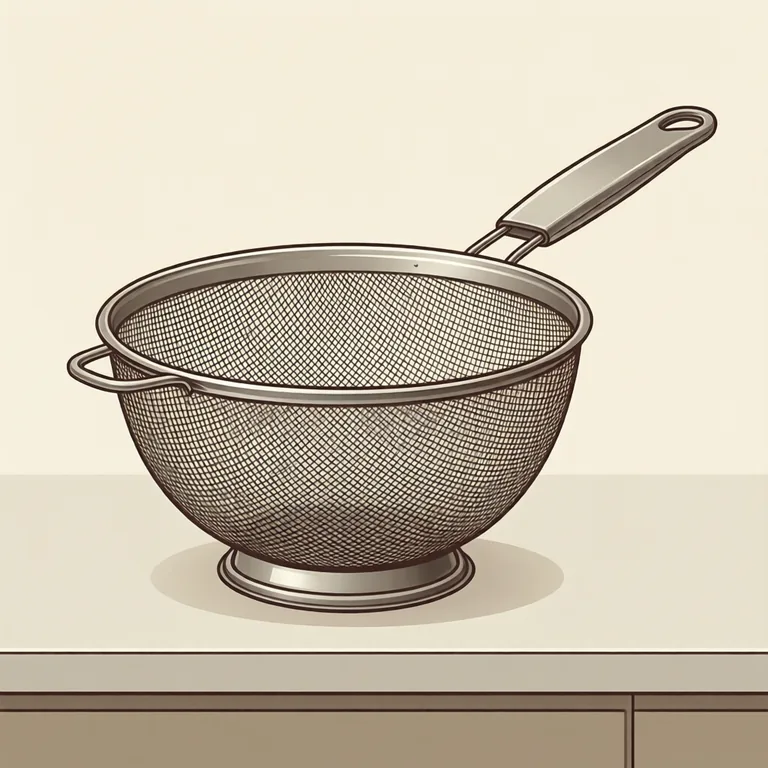
- n. 筛子, 滤网
- v. 筛, 过滤
- Definition
- n. a tool with small holes used to separate solids from liquids
- v. to pass something through a sieve
- Example
- She used a sieve to separate the flour from the lumps.
- 她用筛子把面粉里的疙瘩筛出去。
Synonyms & Differences 近义词辨析
Compared meaning: a tool for sorting or filtering material (noun).
比较义项:筛子(分离、筛选用具)(名词)。
- screen
Refers to a coarser, often industrial or outdoor device (a mesh frame) used to sort or filter larger solid materials like gravel, sand, or ore by size; rare in kitchen use.
screen(筛子)通常指网眼较粗的工业或工地用具,用于按颗粒大小分拣沙石、矿石等较大的固体材料,很少用于厨房场景。
The workers used a large screen to separate the gravel from the sand.
工人们用一个大筛子把碎石和沙子分开。
- sieve 本词
Refers to a fine-mesh tool, most often used in the kitchen or a lab, for separating solids from liquids or straining lumps out of powder.
sieve(筛子,滤网)通常指网眼较细的厨房或实验用具,用于把固体从液体中分离出来,或筛去粉末中的结块。
She pressed the sauce through a sieve to remove the seeds.
她把酱汁压过筛子,滤掉了籽。
Screen and sieve both mean a tool with small holes for sorting or filtering. Screen is often industrial, used to sort solid materials like gravel or sand by size. Sieve is used mostly in the kitchen, to separate solids from liquids or remove lumps.
这两个词在“筛子”这一义项上意思相近,但语境不同:screen 多用于工业或工地场景,筛选较大颗粒的固体材料;sieve 多用于厨房或实验室,筛选细小颗粒或分离固体与液体,语气更日常、家常。这里不比较 screen 的“屏幕”“纱窗”等其他义项。